
FORESTS AND LAND CHANGE MAPPING

Forests are vital earth ecosystems that provide habitat for a variety of species, harbor immense natural resources, and provide benefits for human refuge and livelihood. Deforestation and forest degradation, however, have made forests vulnerable, causing grave consequences such as species extinction and loss of vital plant resources, soil degradation, and, particularly with tropical rainforests, significant impacts on global climate. The protection of forests is therefore essential, and mapping such forests is a crucial component in this effort.

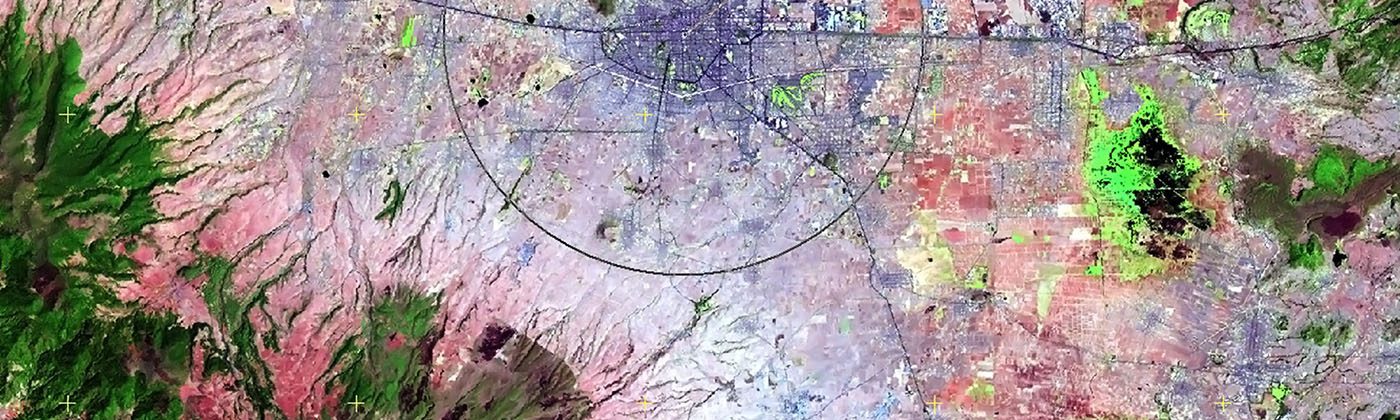
Analyzing satellite data with software technology, we can accurately and efficiently model deforestation and degradation by mapping forest extent with timely information on forest change at varying scales and dates.

IDRISI offers the tools to:

  • Map land cover and forest carbon resources
  • Model deforestation and future land change scenarios
  • Conduct REDD mapping and analysis
  • Model ecosystem service impacts
  • Analyze biodiversity and habitats
  • Observe climate trends

The development of IDRISI has been highly influenced by the specific needs of conservation organizations. Therefore, IDRISI includes tools that are precisely focused on the complex interplay of the factors involved in ecosystem preservation. Extensively tested in the field, the IDRISI software helps the conservation practitioner make informed decisions on how best to protect our valuable forest resources and the habitat they provide for biodiversity.

Since IDRISI is an integrated GIS and Image Processing software, users can easily import and pre-process their remotely-sensed data for immediate analysis, without porting over to a separate software package.  Furthermore, unlike other tools in the industry that offer spatial analysis, IDRISI does not need to be augmented by additional extensions for highly selective applications. All analytical tools come standard within IDRISI.


Learn more about using IDRISI for Forest and Land Change Mapping

IDRISI Selva Brochure
Modeling REDD Baselines using IDRISI's Land Change Modeler Focus Paper
Land Change Modeler Focus Paper
Exploring Image Time Series with Earth Trends Modeler Focus Paper


Analytical Examples:

 
REDD Land Change Analysis in Madagascar

The first stage of a REDD project is the understanding of the historical trends in land use change. The Change Analysis tab in Land Change Modeler provides tools for the rapid assessment of change, allowing one to generate a series of evaluations of gains and losses, net change, persistence and specific transitions both in map and graphical form. This figure shows the historical pattern of change in the Ankeniheny-Mantadia Corridor in Madagascar.

Back to Top

 
REDD Transition Potential Modeling and Driver Variable Selection

An important element for predicting future scenarios is understanding the underlying driving forces of change. The transition potential modeling facility in Land Change Modeler allows users to derive transition potential maps based on a set of driver variables, such as: slope, distance from roads, distance from markets, elevation, etc... These variables can be static or dynamic.

Back to Top

 
REDD Land Change Prediction and Scenario Modeling

Projecting future scenarios is crucial to understanding the potential impacts of proposed project interventions. Based on the historical patterns of change and identified driver variables, users can engage in scenario modeling of future outcomes and assess the impacts of these predictions as they pertain to REDD projects. These modeled impacts include not only forest and carbon assessments, but also impacts on biodiversity and ecosystem services. 

Back to Top

 
GEOMOD Land Change Simulation with IDRISI Taiga

GEOMOD is a land change simulation modeling tool. It predicts the locations where land is likely to change from one category to another. In combination with the IDRISI statistical modules, such as ROC and VALIDATE, these tools allow users to measure the certainty of scenarios of future land change.

Back to Top

Clark University